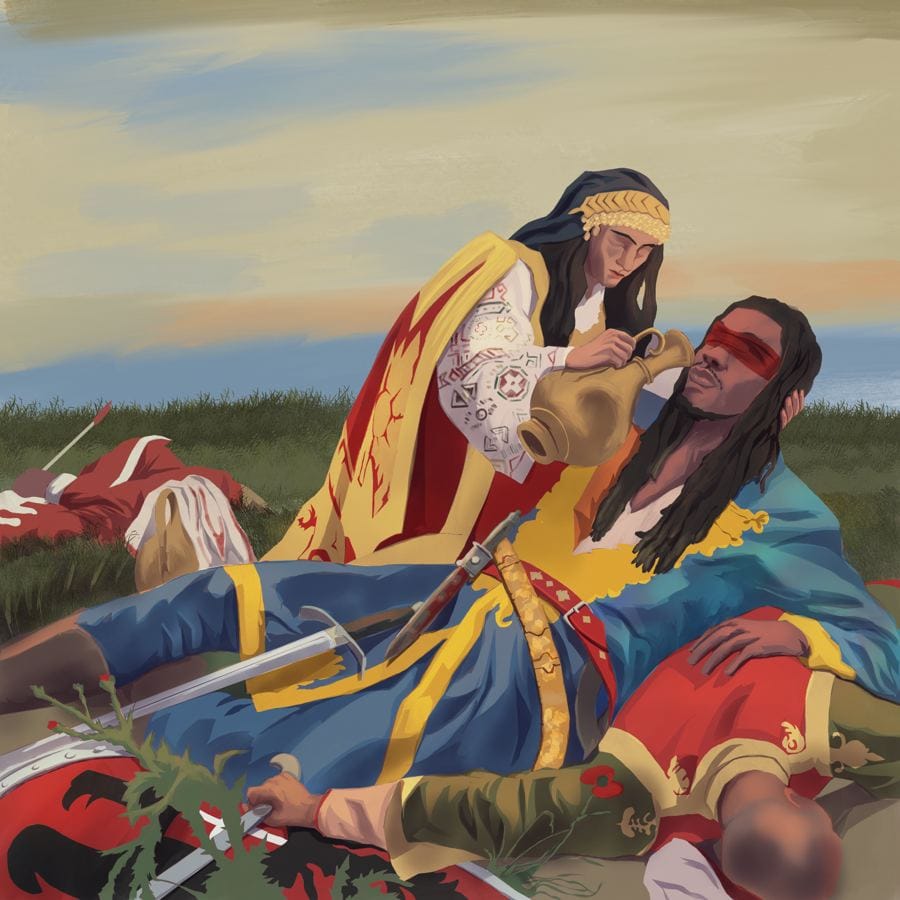
Type a prompt, wait thirty seconds, get a cover. It's fast, it's cheap, and for a lot of creators it's the first place they look now before commissioning anyone. But if you've spent any time scrolling through album covers, book covers, or manga thumbnails lately, you've probably also noticed something: a lot of them look the same.
This isn't an "AI bad, human good" piece. It's a practical breakdown of where each option actually makes sense, so you're not choosing based on hype or habit either way.
Where AI-Generated Cover Art Actually Works
To be fair to the tools: there are real situations where AI-generated art is a reasonable choice.
If speed and cost are the only variables that matter for your specific project, AI tools solve for that.
Where AI-Generated Art Falls Short
The gap shows up in exactly the places that matter most for a cover doing real marketing work:
Character and brand consistency. If you need the same character to appear correctly across a full manga volume, a series of singles, or a book and its sequels, AI generation struggles to hold a consistent identity across multiple pieces without heavy manual correction — which usually means you end up doing (or paying for) the human work anyway.
Specificity to your actual vision. AI tools are excellent at producing a cover in a style. They're much weaker at producing your character, your exact color story, or a composition that reflects a brief with real creative direction behind it. You often end up steering the tool toward something close, rather than getting something built around what you actually wanted.
Commercial and legal clarity. Ownership and licensing of AI-generated imagery is still legally unsettled in a lot of jurisdictions, and outputs can unintentionally resemble existing copyrighted work. For anything you plan to sell, distribute widely, or trademark, that's a real risk — not a hypothetical one.
The "I've seen this before" problem. Because these tools train on massive, overlapping datasets, a huge volume of AI output converges on similar compositions, lighting, and color choices. On a platform where thumbnails are competing for a half-second of attention, blending in is the opposite of what a cover is supposed to do.
What Hiring a Human Illustrator Actually Gets You
The value of a commissioned piece isn't really "better brushstrokes" — it's the process itself:
This is exactly why artists working across album covers, manga, and illustration — like Jhay Sanyay — still see strong commission demand even with AI tools now widely available. The commission process itself (references, sketch approval, revisions, rights) is solving problems AI generation doesn't currently solve well.
A Practical Way to Decide
Ask yourself:
For most real releases — an album people will actually hear, a manga volume people will actually buy, a book cover that needs to hold up on a shelf next to competitors — the brief-driven, revision-capable, rights-clear process of a commission is doing work that a prompt still can't replicate.
Final Thoughts
AI art tools aren't going away, and there's nothing wrong with using them for what they're actually good at — speed, iteration, and low-stakes drafts. But for anything meant to represent a real project, carry a consistent identity, or hold up as something you'll want to own outright, commissioning a human illustrator remains the stronger choice — not out of nostalgia, but because the process itself solves problems the tools don't.
If you're weighing your options for an album, manga, or illustration cover, Jhay Sanyay Studio takes commissions across all three with a structured, brief-to-delivery process built around your actual project.
Get Your Custom Artwork Stamped
Jhay Sanyay Studio handles custom cover art, manga/comic illustrations, and logo design from brief submission to final delivery. Fill out your job ticket below for a 48-hour quote.
FILL OUT JOB TICKET